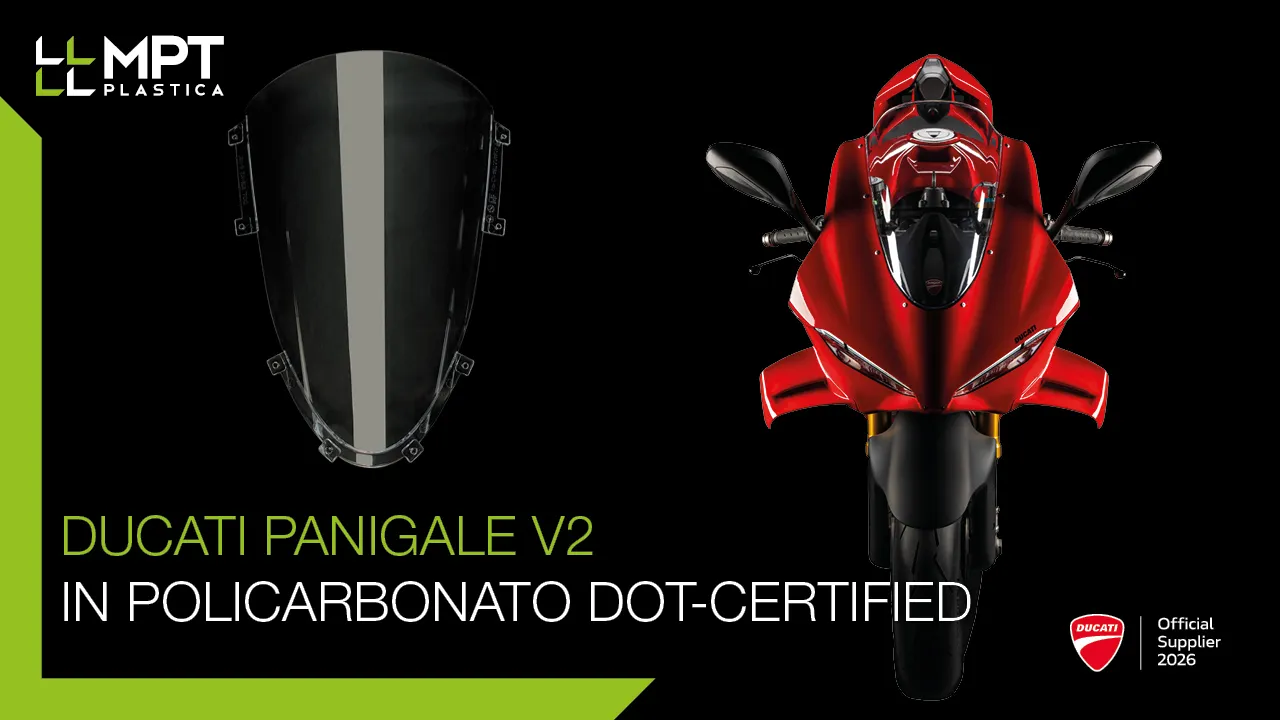
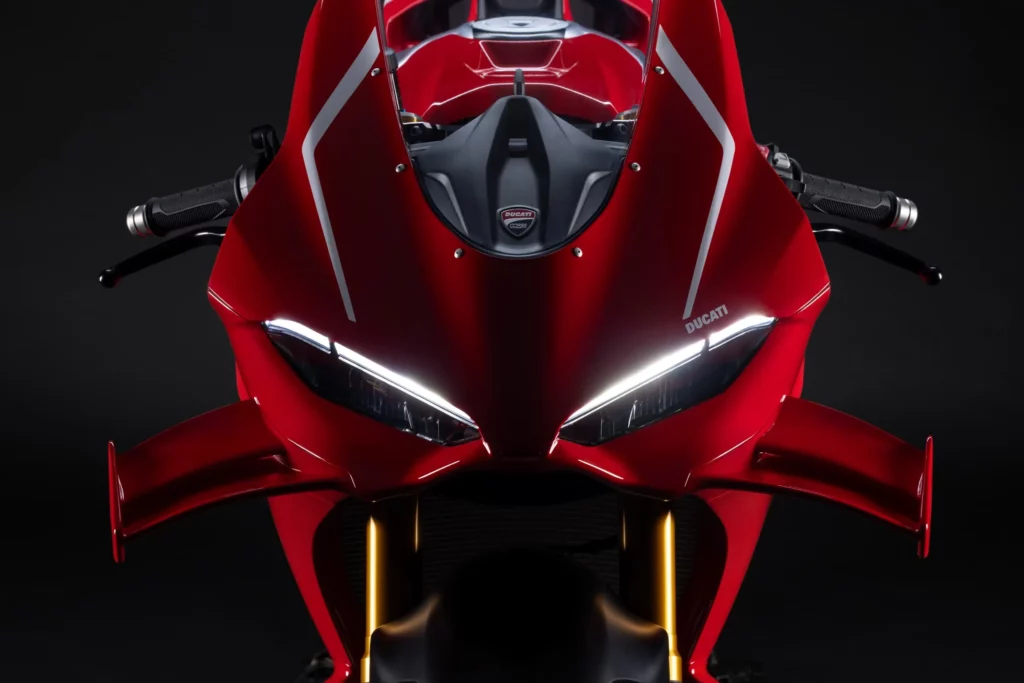
Injection molding of transparent polycarbonate: optical quality and DOT certification in the Ducati Panigale V2 windscreen
From geometry definition to validation: where the surface defines performance
The technical requirement: optical quality as a functional condition
The surface of a sport motorcycle windscreen must deliver stable vision even under aerodynamic load. Optical quality is therefore not merely aesthetic—it is a functional condition that directly impacts safety.
In the injection molding of 3 mm transparent polycarbonate, as in the windscreen of the Ducati Panigale V2, this balance is particularly sensitive: even minimal variations introduced during the process can alter the component’s behavior in operation.
The focus shifts from the final result to the conditions under which the material is processed.
The critical point: where optical distortion originates
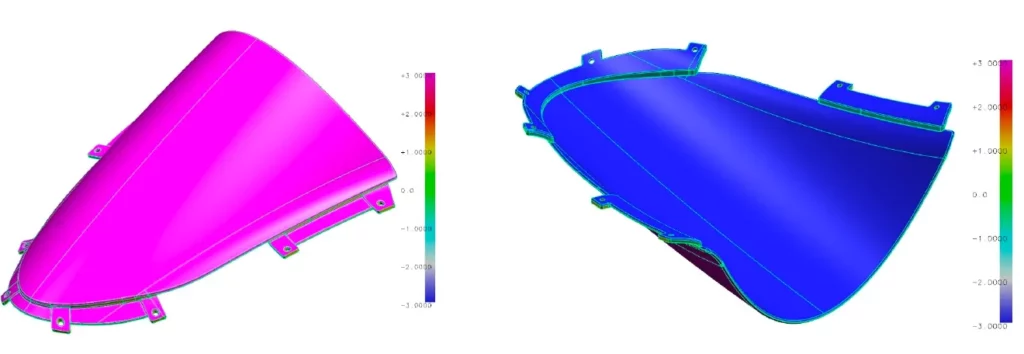
Refractions, distortions, and glare do not necessarily appear during production. They emerge when the component is in operation, under aerodynamic load and thermal stress.
In 3 mm transparent polycarbonate, this behavior is directly linked to molding conditions:
-
- non-uniform mold filling generates pressure gradients, introducing internal stresses into the polycarbonate
- during cooling, these stresses stabilize within the part structure
- in operation, the surface reveals these conditions in the form of optical distortions
Component geometry and mold surface quality act on the same phenomena: they determine material flow and the distribution of stresses throughout the part.

The solution: acting before the defect forms
To modify this behavior, the intervention point is the definition of the conditions under which the material will be processed before the mold is even built.
“We defined gate positioning to achieve uniform filling,” explains Stefano Luisetti Technical Office Manager at MPT. “This directly affects how the material enters the mold and the conditions under which internal stresses are generated.”
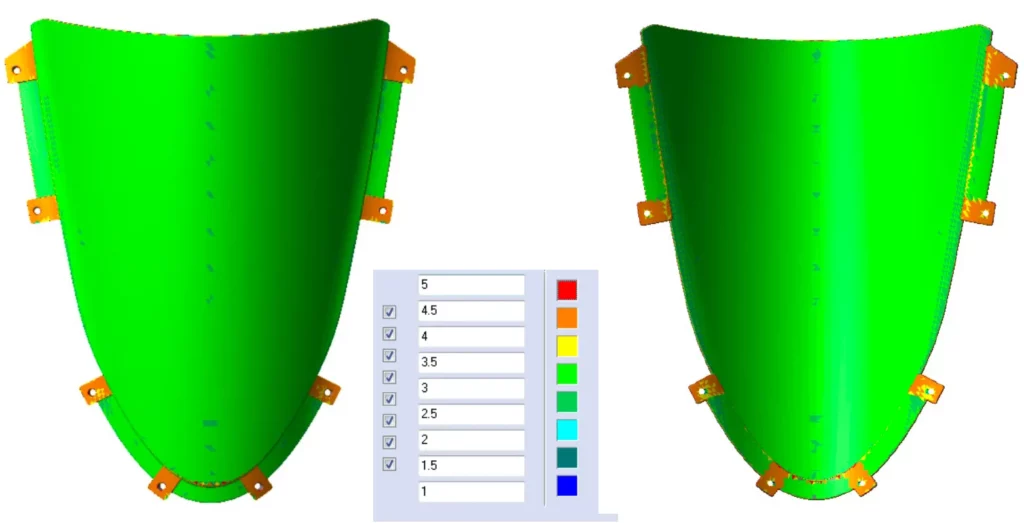
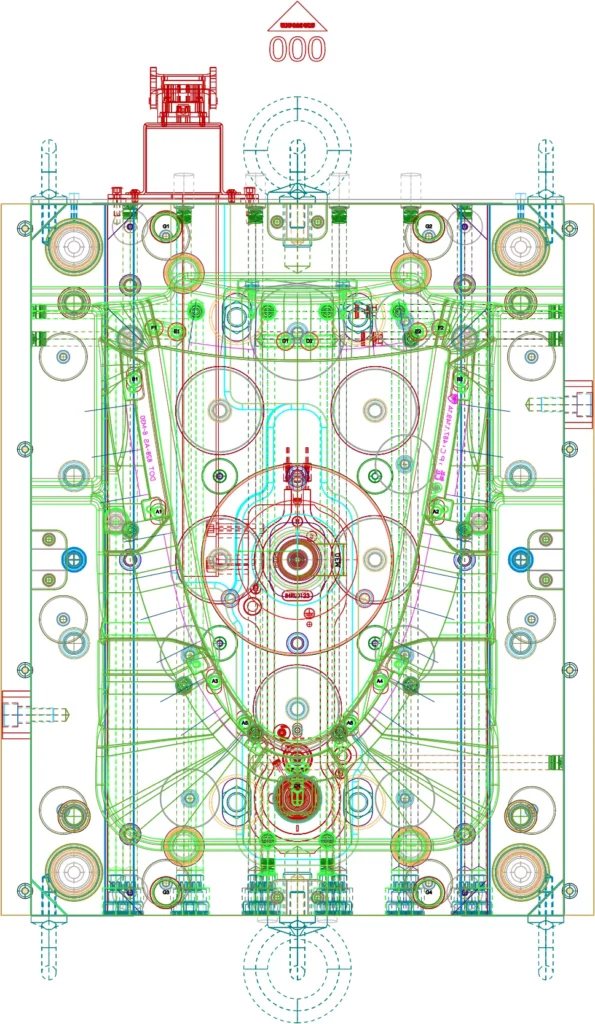
The revision of fastening geometries eliminates local thickness variations and discontinuities that would otherwise disrupt flow and concentrate stresses. At this stage, mold co-design becomes critical: intervening on the model to define process conditions before they are fixed into the tooling.
At MPT, polycarbonate mold design and manufacturing operate in continuity, allowing design decisions to be directly translated into real production conditions. The result is not an adaptation of design to process, but the controlled definition of the conditions under which the process takes place.
Moldflow analysis: simulating flow before production
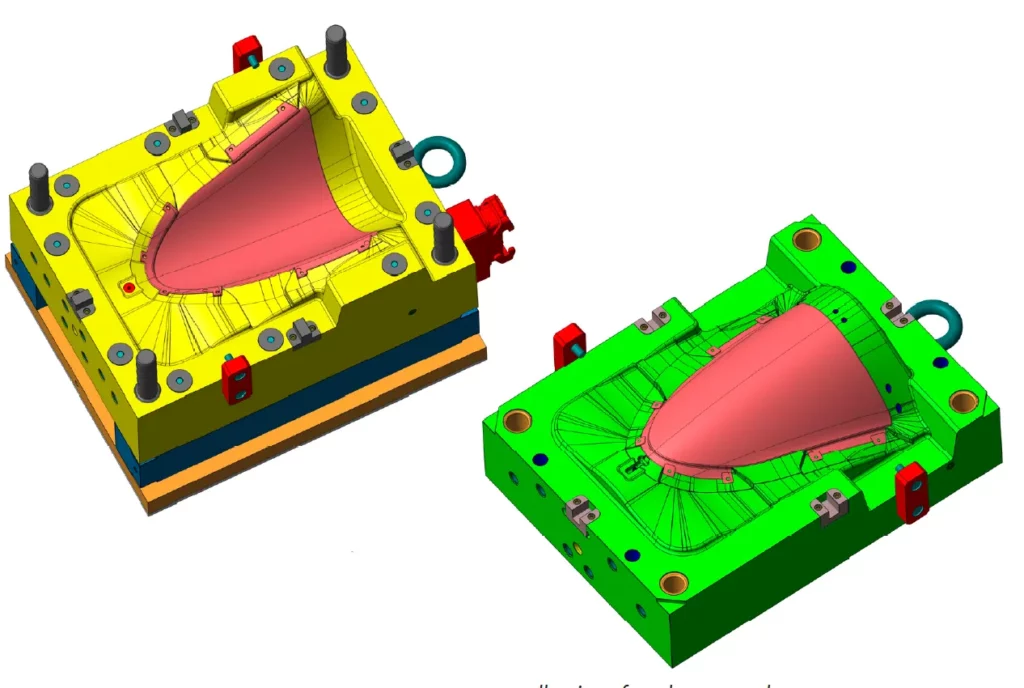
Before mold construction, Moldflow analysis allows simulation of the behavior of transparent polycarbonate during filling. This step makes it possible to:
- verify flow uniformity based on gate positioning
- identify areas at risk of pressure gradients and stress concentration
- validate geometric decisions before they become irreversible in the mold
In the case of the Ducati Panigale V2 windscreen, Moldflow analysis guided co-design decisions and reduced the risk of optical defects downstream in the process.

From analysis to result: conditions become performance
The conditions defined at the design stage are transferred into the mold and maintained throughout production.
Mold splitting and thickness distribution determine the material path during filling: if the flow is not stable, local gradients compromise structural uniformity.
The mold surface acts on the same level. The use of mirror-polished 1.2083 steel reduces micro-discontinuities that would otherwise be replicated on the part, compromising optical quality.
When these conditions remain consistent throughout the injection molding process, the surface maintains optical stability even under the most critical operating conditions.
DOT certification: validation of consolidated expertise
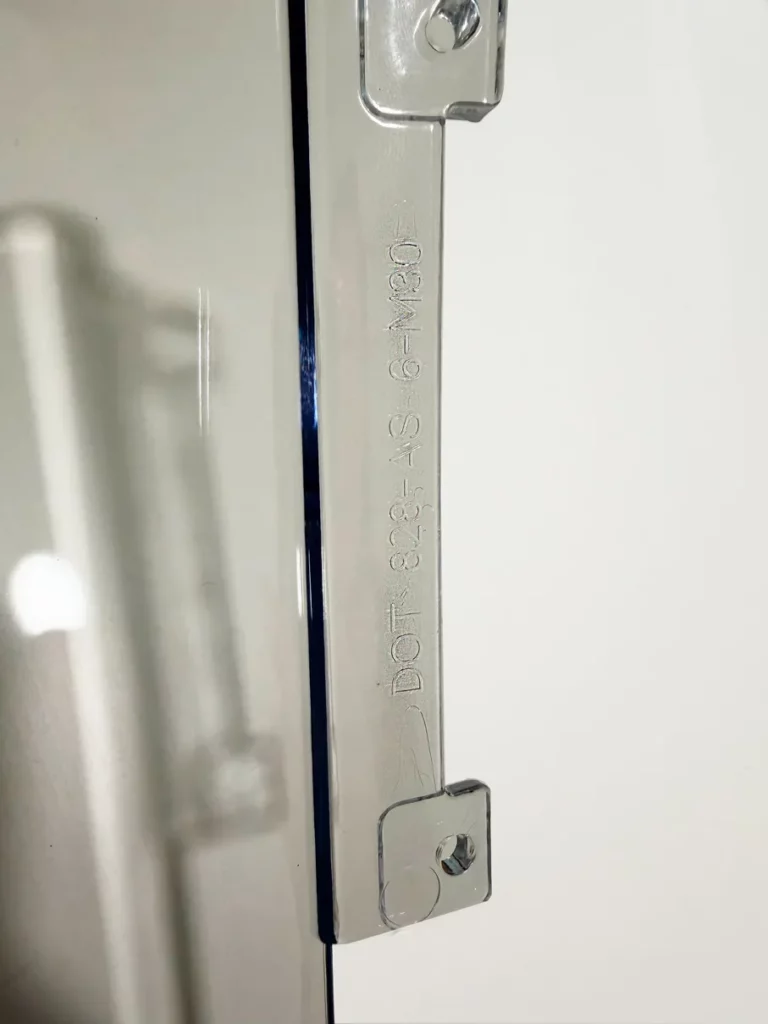
Processing 3 mm polycarbonate requires control of all the described conditions throughout the entire process. This expertise, developed across multiple applications, is validated by DOT certification according to the ANSI/SAE Z26.1-1996 standard.
“This certification,” notes Filippo Taviani, “is a key asset for MPT Plastica: an added value that very few companies can claim. We have extensive experience with polycarbonate, processing 3 mm sheets across numerous projects in the motorcycle sector, as well as in lighting and electrical/electronic applications.
The variety of challenges we have addressed has allowed us to develop the ability to identify effective solutions for delivering high-quality optical polycarbonate components, while also maintaining cost efficiency and reliable lead times—both strategic factors for customer competitiveness. DOT certification confirms the validity of the results achieved.”
When optical quality becomes a process variable
Geometry, material, and operating conditions all contribute to defining the final behavior of the component. The surface is not an aesthetic outcome, it is the expression of how the material has been processed.
This is where a technical requirement becomes a stable and repeatable performance in the injection molding of optical polycarbonate components.
If your projects require this level of control, we are open to technical discussion. Contact us to define the critical variables together and align design with production.