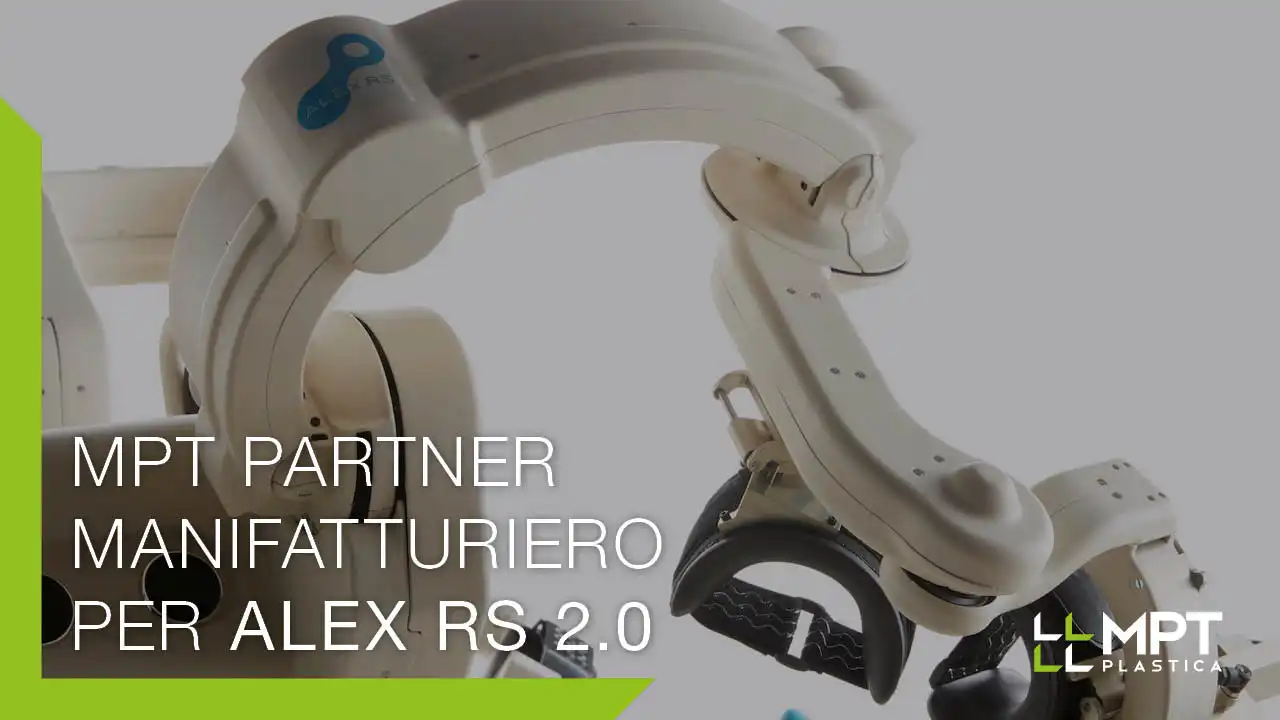
Towards ALEx RS 2.0: Prototyping, Co-Design, and Industrialization for a Rehabilitation Exoskeleton
What is ALEx RS
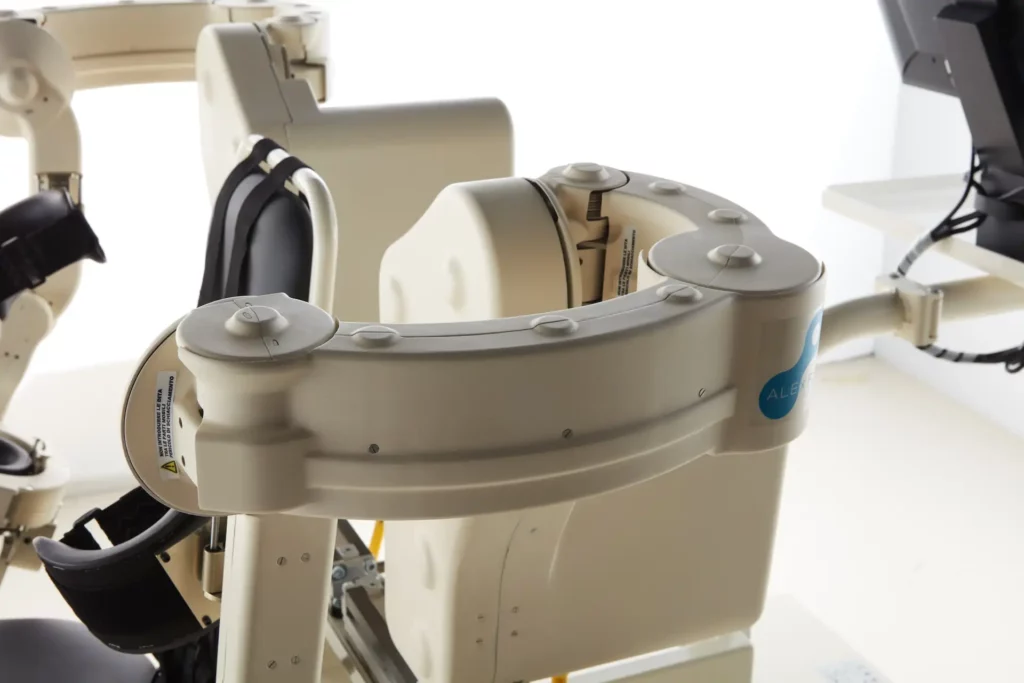
ALEx RS is an integrated robotic rehabilitation station for the upper limb that combines exoskeletal technology and Virtual Reality (VR). The device was developed by Wearable Robotics, a spin-off of the Scuola Superiore Sant’Anna, which develops wearable robotic exoskeletons for neurological rehabilitation and work support.
Version 1.0 was launched on the market in 2020, and today version 2.0 is under development, which includes:
• Integration of the new ALEX HAND EXOS module;
• Revision of the graphics and physics of serious games (DLA);
• Reduction of the BOM to make the system more sustainable during the industrialization phase.
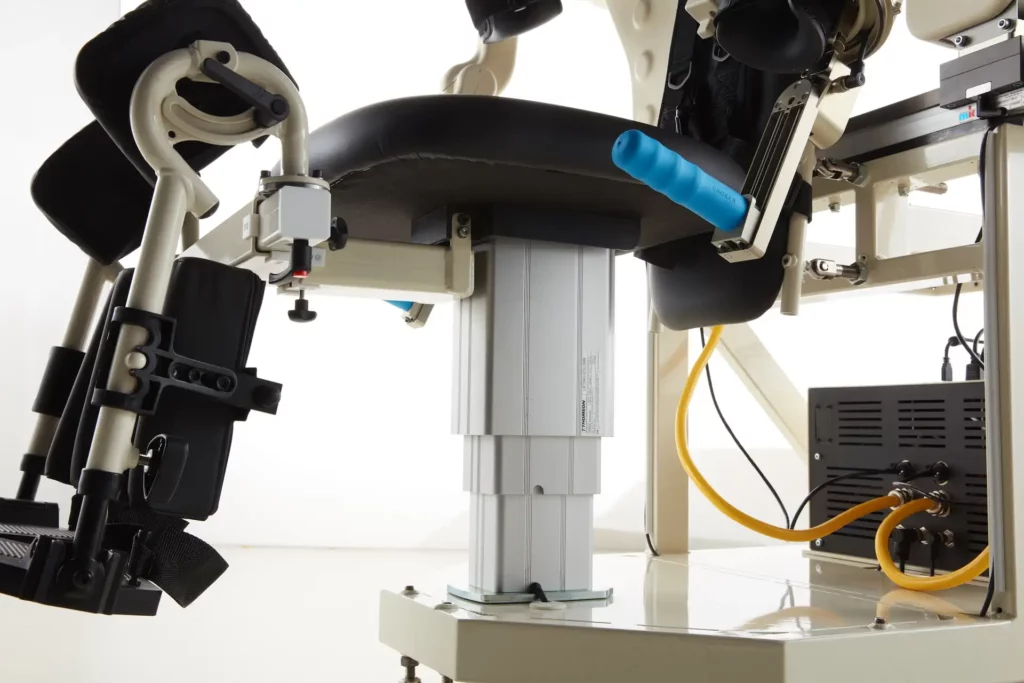
The proposal presented to the Tuscany R&D Call involves not only Wearable Robotics but also Scuola Superiore Sant’Anna (IIM), Fluid Wire Robotics, and MPT Plastica. The goal is to evolve ALEx RS towards a more advanced version that aligns more closely with real-world usage requirements, outlining a clear commercial horizon and an industrial partnership that knows how to achieve it.
The role of MPT
MPT enters the project as a manufacturing partner, focusing on prototyping and industrialization, addressing the complexity of the system and transforming it into safe and efficient technical choices.
What we will do:
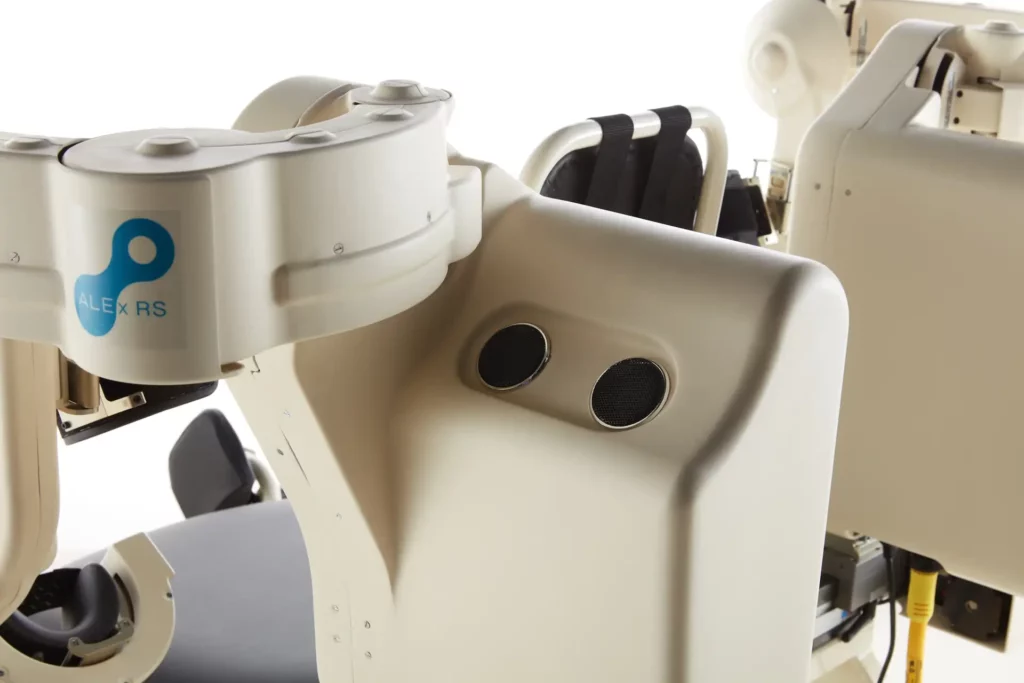
- Co-design of plastic covering components
Covers, shells, protections, and interface geometries: we work on thicknesses, reinforcements, curvature, finishes, accessibility, and assembly constraints. - Physical prototyping
We create prototypes to validate dimensions, interfaces, and construction solutions, integrating (where required) plastic and metal parts. - Industrialization and BOM reduction
We support choices oriented towards manufacturability: simplifying components, ensuring compatibility with processes, assemblies, maintenance, and cost management.
Why MPT: established medical experience
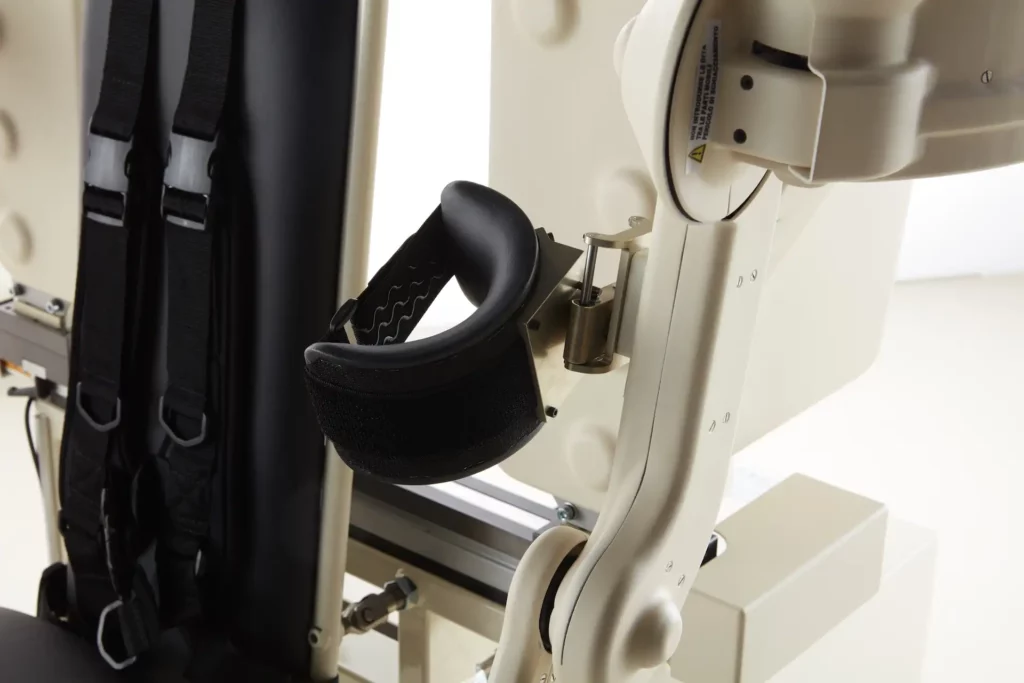
MPT is not new to the medical sector. In our activities, we already produce covering components for medical devices: shells, covers, and protective elements that must meet precise material, finish, sanitizability, and regulatory compliance (MDR) requirements.
This foundation has allowed us to enter the project not only as suppliers of technical components in plastic material but as partners supporting industrialization: someone who understands the requirements of a medical device, knows what can be built and what cannot be, and makes the right design choices even before the product physically exists.
“With MPT, we had already worked together before and knew what to expect: the ability to read a complex system and translate it into buildable components. For a project like ALEx RS 2.0, they were exactly the partner we were looking for.” Dr. Fabio Piazza, Chief Commercial Officer, Wearable Robotics
An applied R&D project, close to the market
For MPT, this work is part of a broader path of applied R&D: putting manufacturing skills at the service of evolving projects, with a clear market goal and a coherent industrialization plan.
A future lesson learned that is already relevant
These steps translate into a single approach: working on the system before the components, alongside partners, so that the functions designed today become stable, safe, and consistent rehabilitative activities tomorrow, aligned with clinical expectations.
This is not an exception related to the medical world; it is the same method we apply in every project: co-design, continuous dialogue with the client, support from idea to industrialization, as in the Formula1Partner model.
And to explore how this approach has already taken shape in various sectors — from robotics to e-mobility and consumer products — you can start from the case studies published at https://www.mptsrl.it/portfolio/